Developed with Unity Engine and C#
As part of this research, I am developing a Mixed Reality prototyping application using Unity Engine and C#. The application is designed to place and evaluate digital product components within a real-world context through an MR headset.
The development process includes preparing 3D product models for real-time visualization, building the MR scene structure, and creating C# scripts for interaction logic, object behavior, and user flow. Unity is used as the main environment for real-time rendering, XR integration, scene management, and prototype testing.
The prototype is intended to support design review tasks such as examining overall form, checking spatial proportions, evaluating interface placement, and comparing physical mock-ups with digital product details.
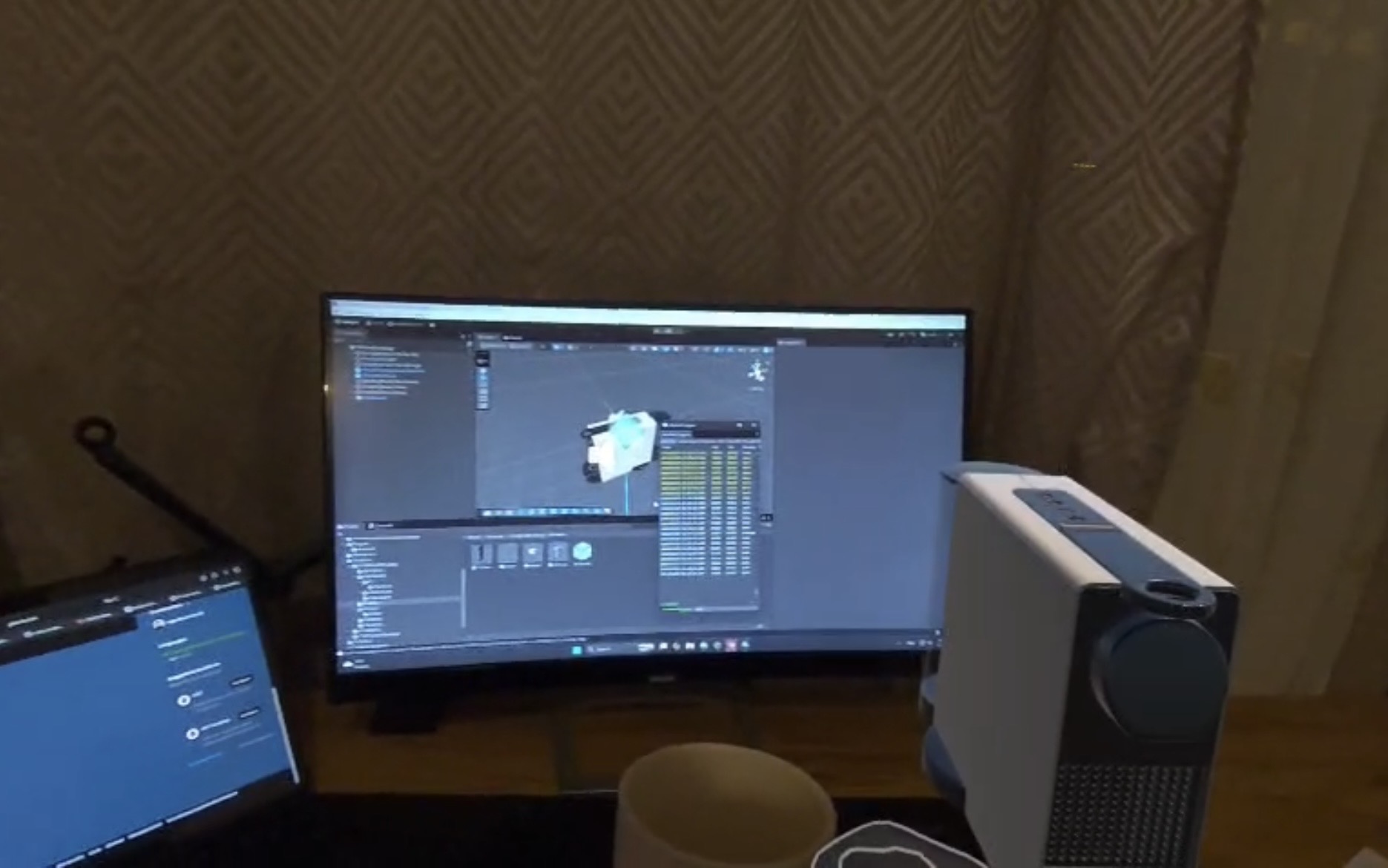
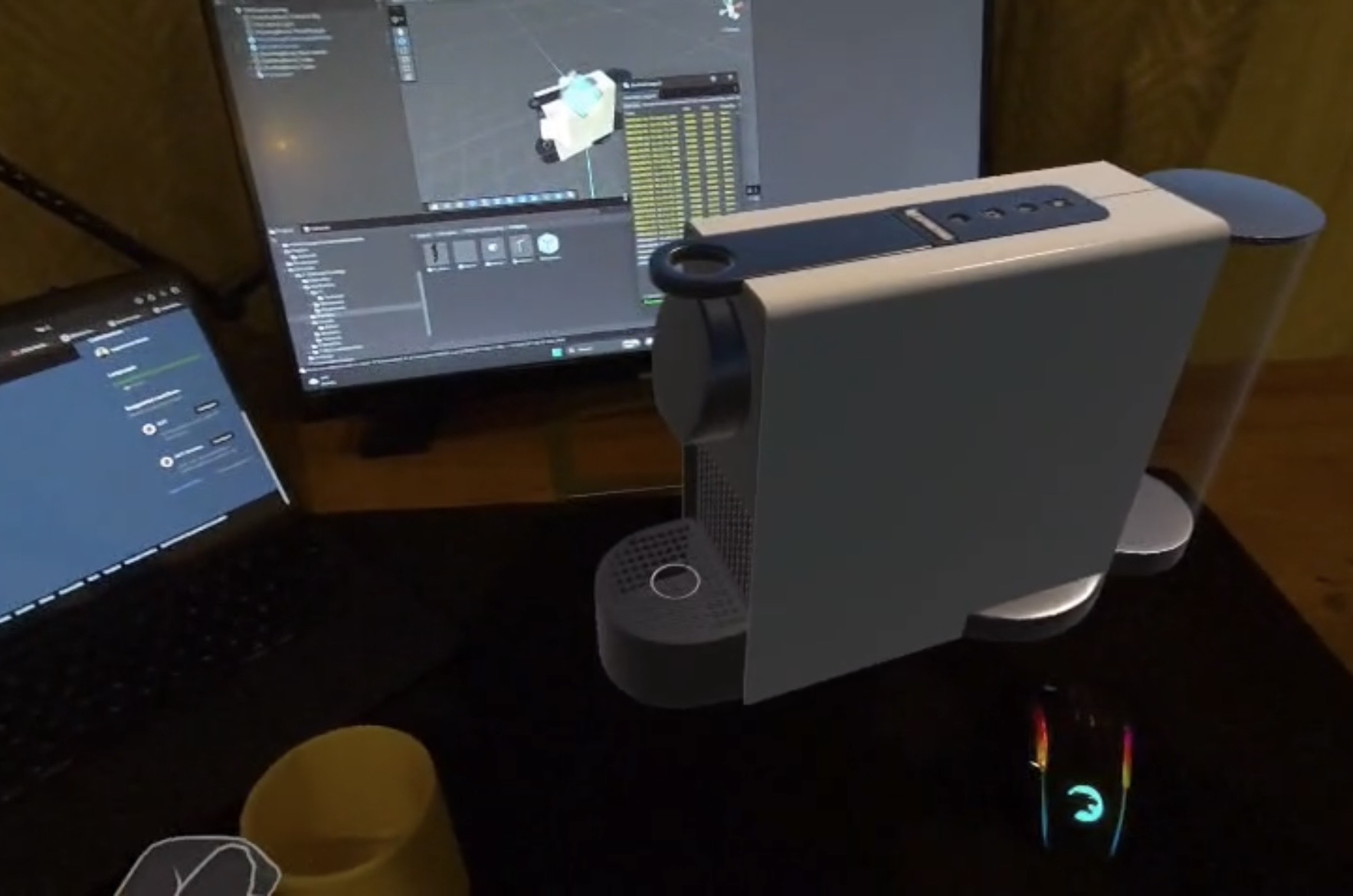
Unity development and MR application preview
The visuals below show the application development workflow and the Mixed Reality prototype experience. They are included to give a quick, practical overview of how the research prototype is being built and tested.
Understanding the value of MR in early design evaluation
The main aim of the thesis is to investigate whether MR-based hybrid prototyping can support designers during early concept evaluation. Instead of relying only on fully detailed physical prototypes, the research examines how a simplified physical space envelope can be enhanced with digital MR overlays to communicate product details more efficiently.
The study focuses on perceived usefulness, usability, design evaluation quality, and practical limitations such as missing tactile feedback, material perception, and physical weight. The broader goal is to understand how Mixed Reality can contribute to faster and more flexible product design iterations.
Accepted to XRM 2026
This research is currently ongoing as part of my Master's thesis in Industrial Design. A related study titled “Exploring Ease of Use in Video-Passthrough Mixed-Reality Prototyping: A Meta Quest 3S Study” has been accepted to the International XR Metaverse Conference 2026 — XRM 2026.